- Product Strategy
- 0 to 1
- Mobile App Design
SATEX — On-Demand IV Therapy
Satex connects patients, doctors and nurses for on-demand, at-home IV therapy.
- Role
- Senior UX/UI Designer
- Year
- 2026
- Scope
- Full Product Design (Strategy, Mobile Apps, Design System, Prototyping, Testing)
- Deliverables
- 2 Mobile Apps (Patient App, Dual-Role Provider/Nurse App), Web Admin
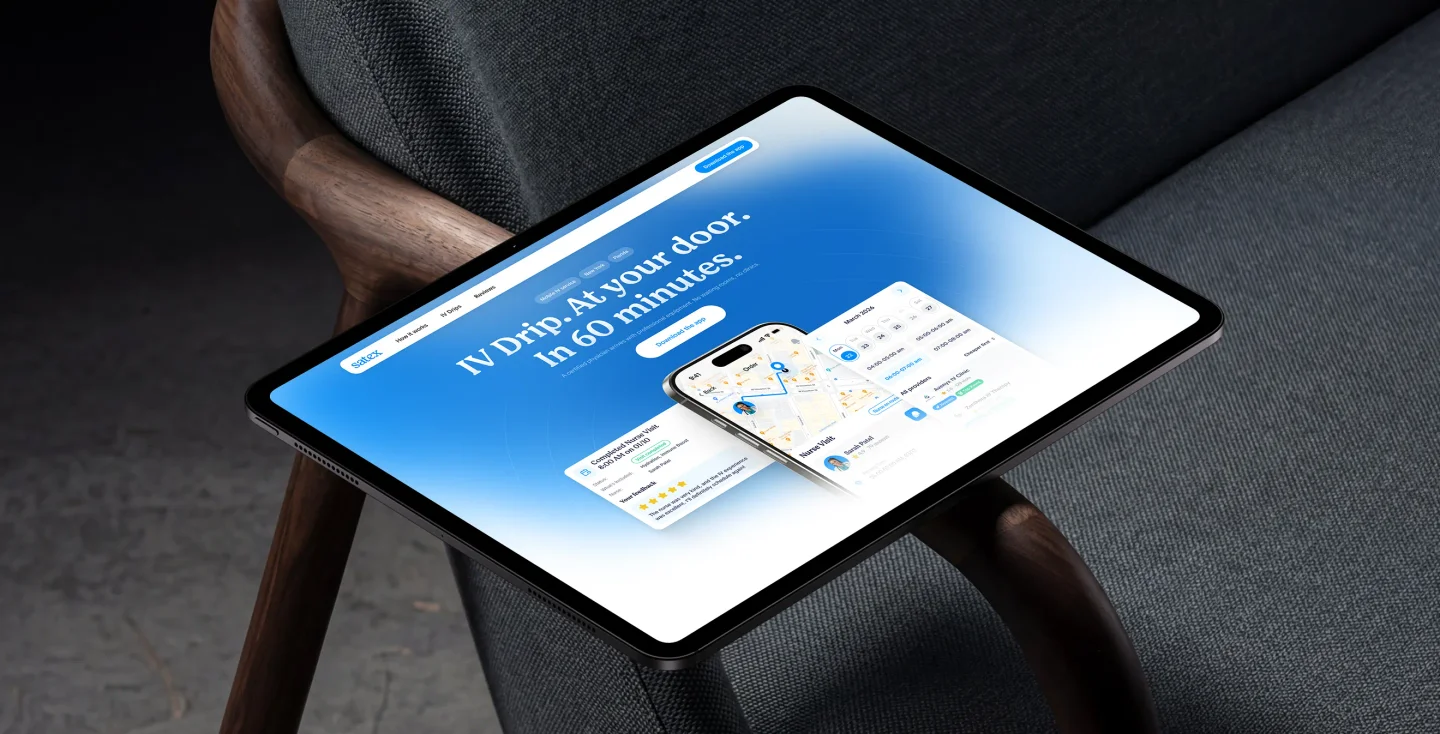
Project Overview
Satex connects patients, doctors and nurses for on-demand, at-home IV therapy. Before this project, the whole business ran on phone calls, spreadsheets and WhatsApp — which meant slow approvals, messy dispatching, and patients with no real way to trust who was showing up at their door.
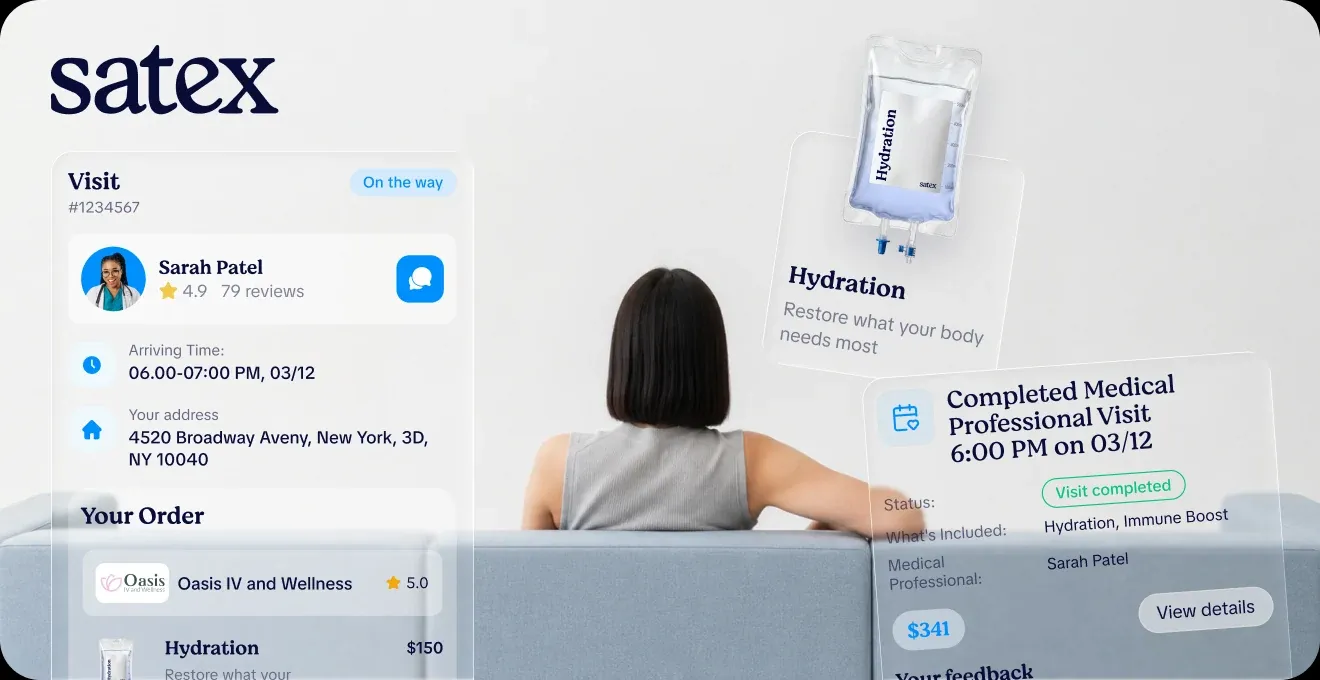
Challenge
The mobile IV therapy industry relies on fragmented operations: phone bookings, manual spreadsheet scheduling, and loose WhatsApp coordination. This creates severe operational bottlenecks, approval delays, poor dispatching, and a lack of patient trust.
Solution
We designed a unified ecosystem connecting a Patient App, a dual-role Clinician App, and an Admin Dashboard. This centralized platform gives operators full visibility — speeding up approvals, streamlining dispatch, and enabling effortless bookings.

Research
1.1. Business Strategy
To align business goals, user needs, and regulatory requirements, we ran stakeholder workshops and mapped the product framework before starting visual design.
1.2. User Research
I mapped the needs and responsibilities of three core user groups. Key Insight: Each role requires a distinct workflow, information hierarchy, and permission level.
Ideation
2.1. Roles and Hierarchy
Healthcare workflows demand strict adherence to legal authority tiers. We mapped key medical roles into the platform architecture.
2.2. Flow Mapping
I designed and documented 16 core operational flows (booking, matching, approvals, dispatch, payments, and cancellations) before moving into UI design. This allowed engineering and founders to validate core business logic early, when adjustments were easy to make.
Design
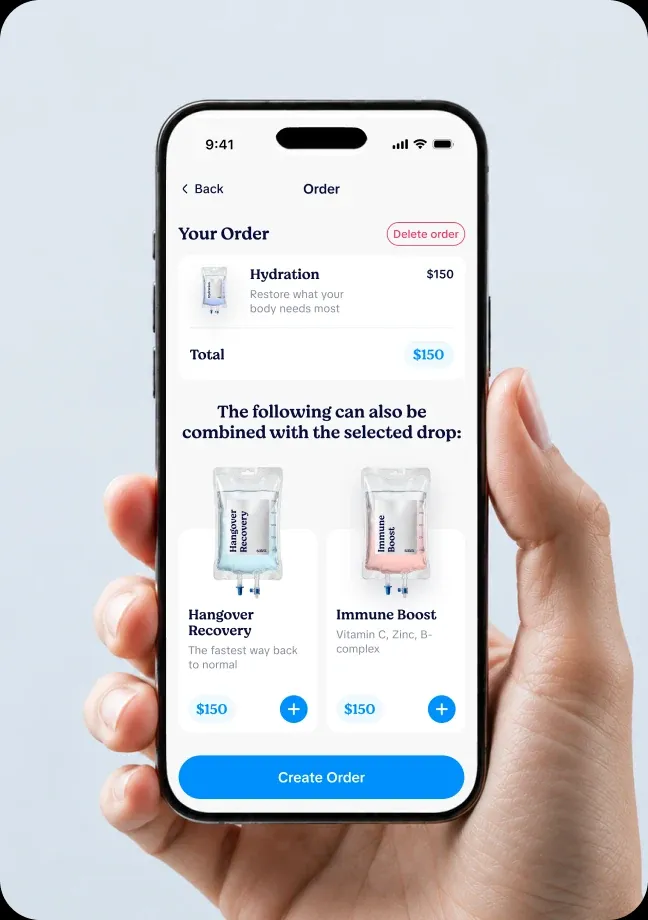
3.1. Patient App
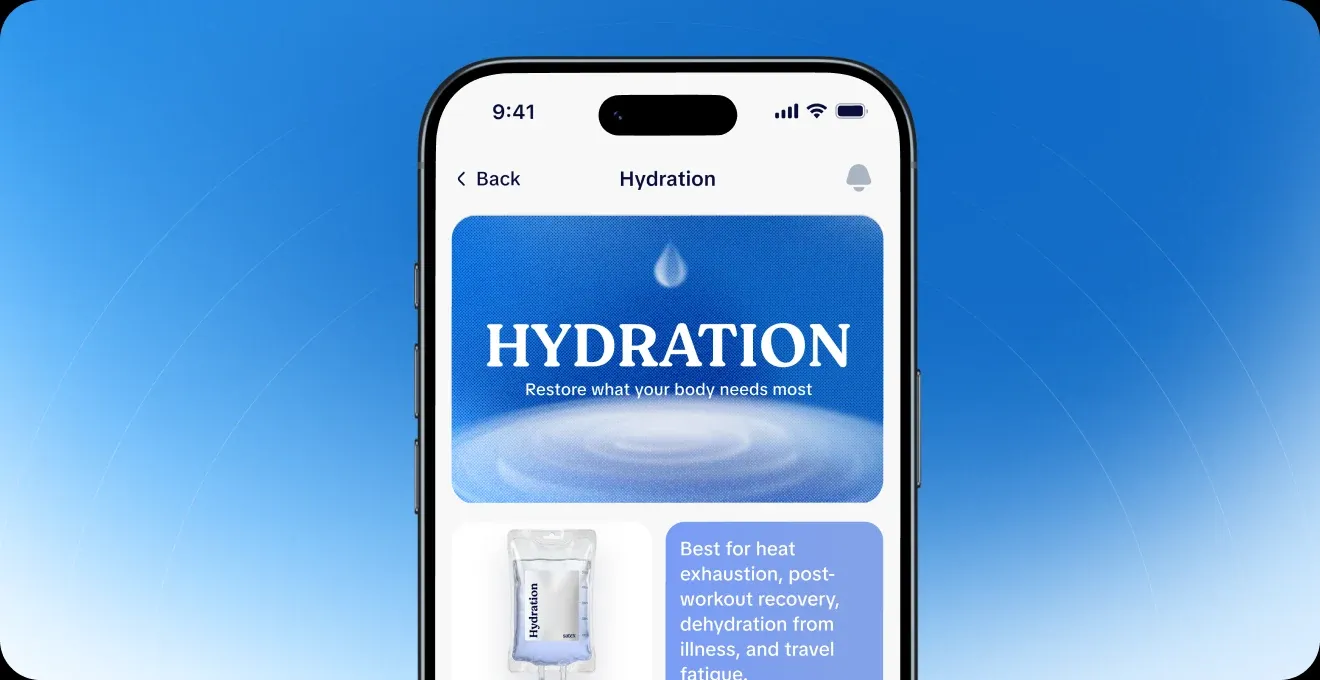
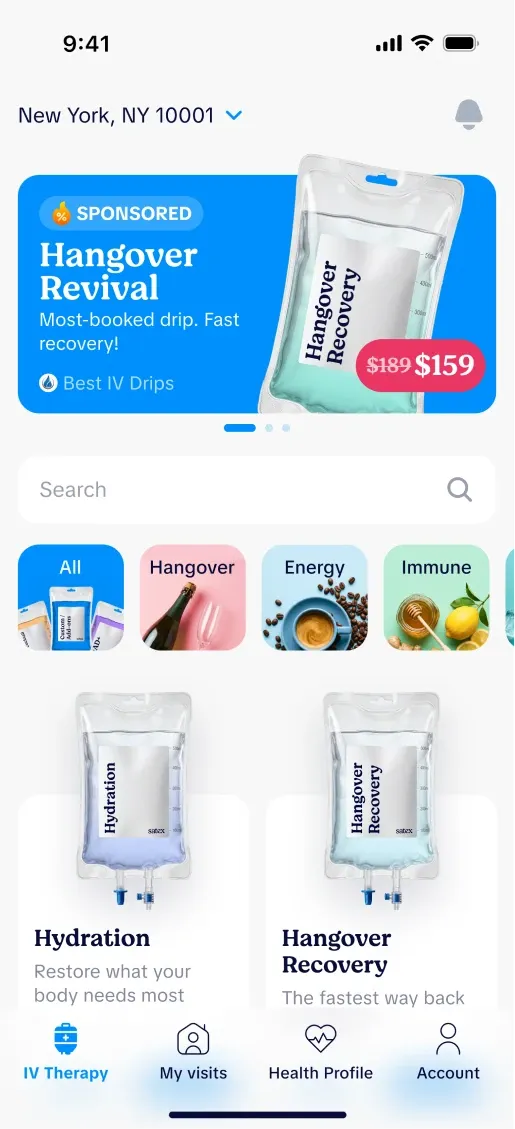
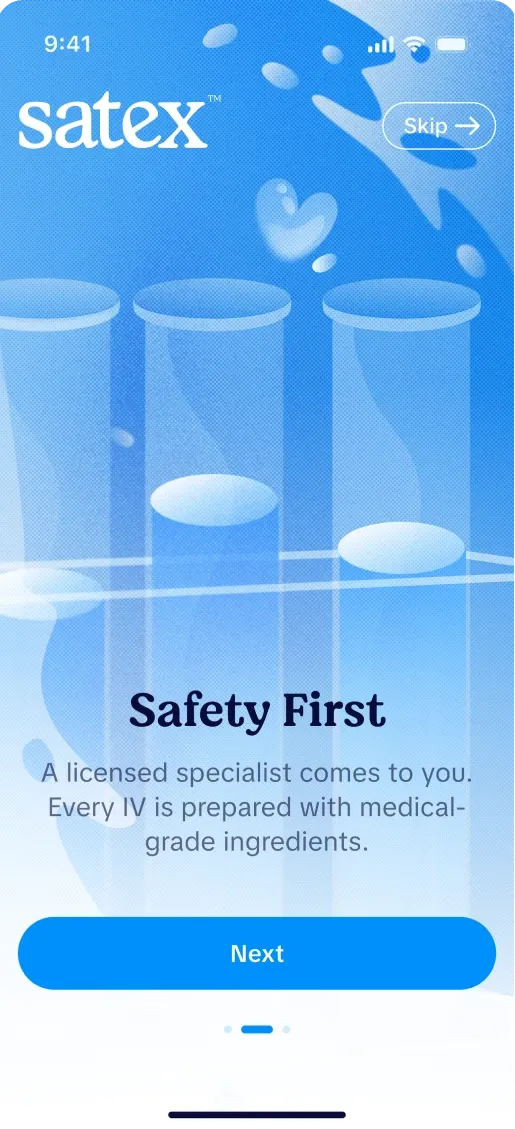
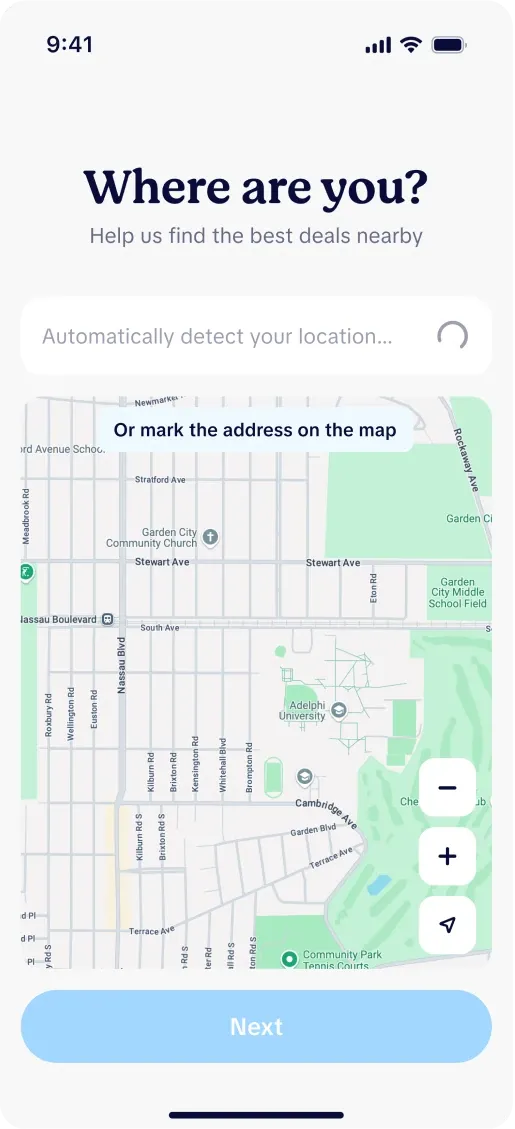
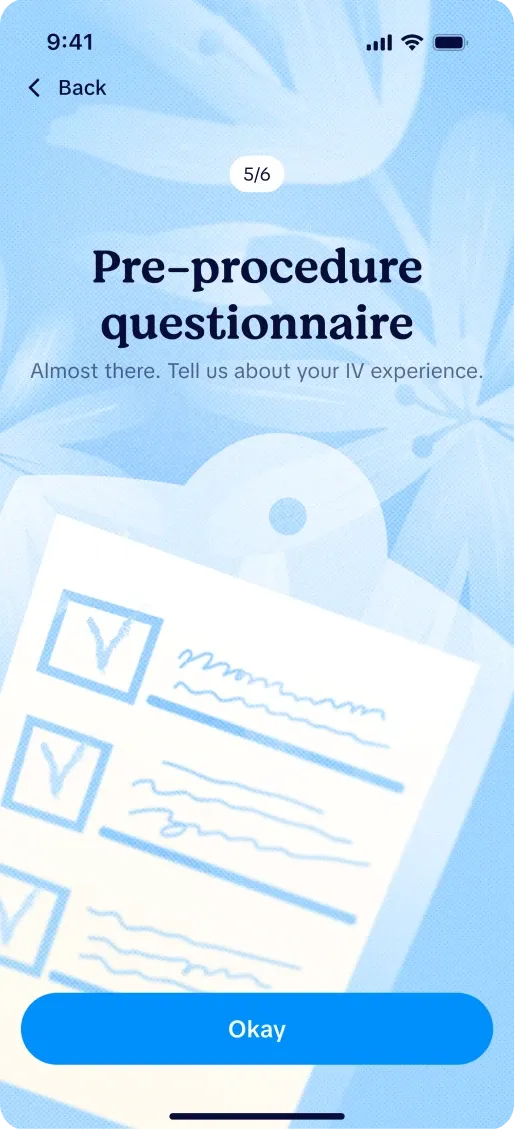
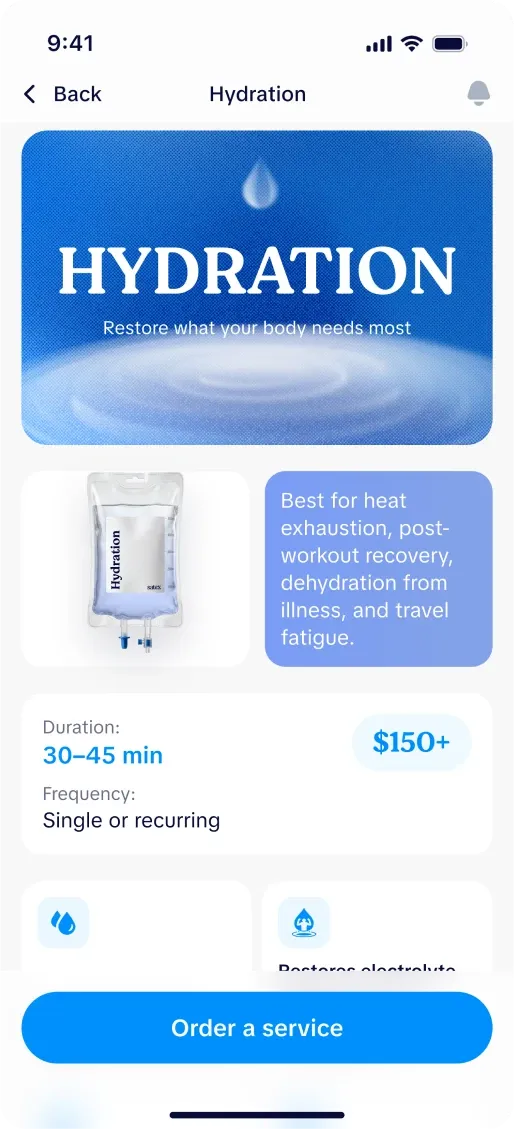
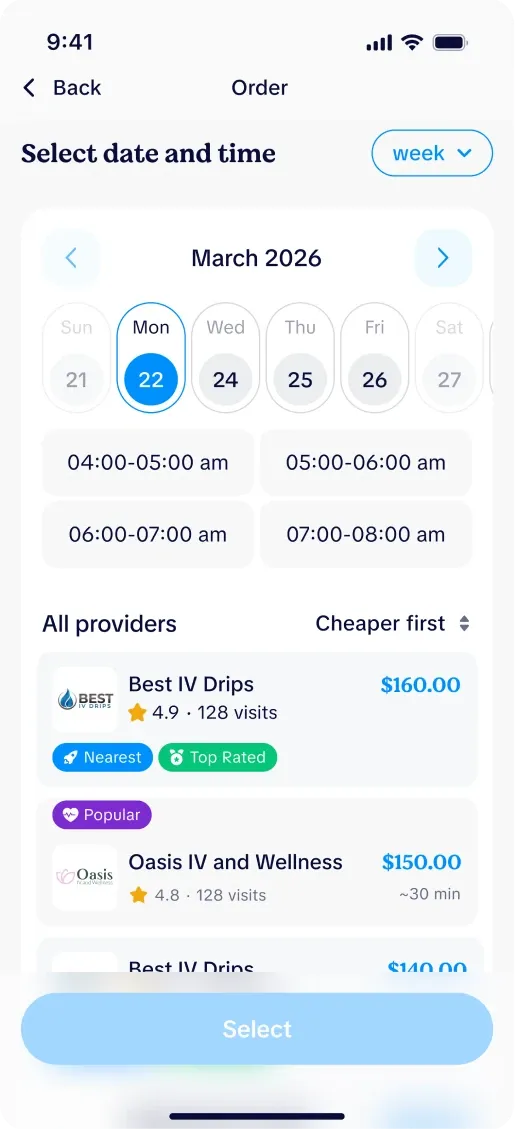
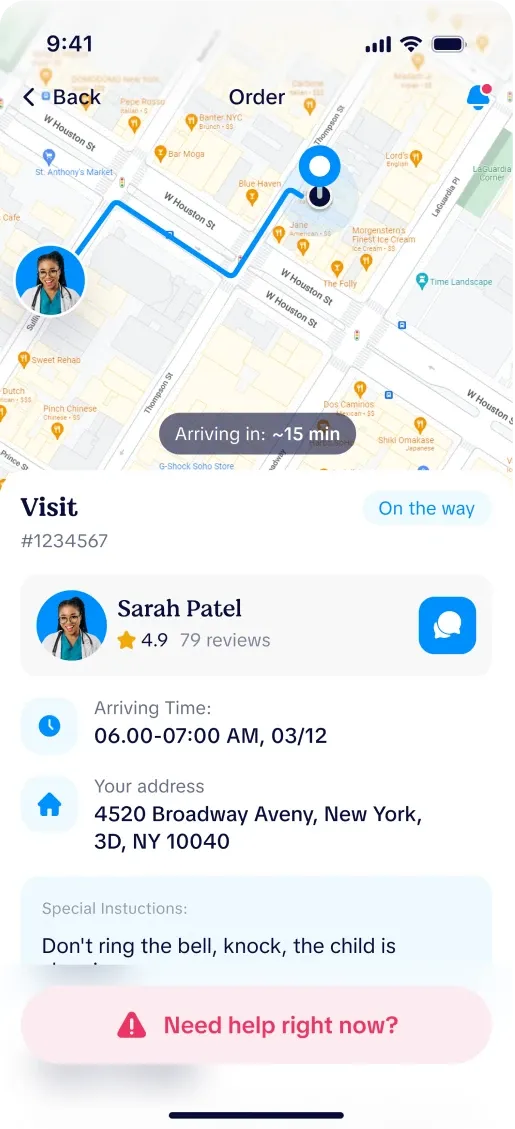
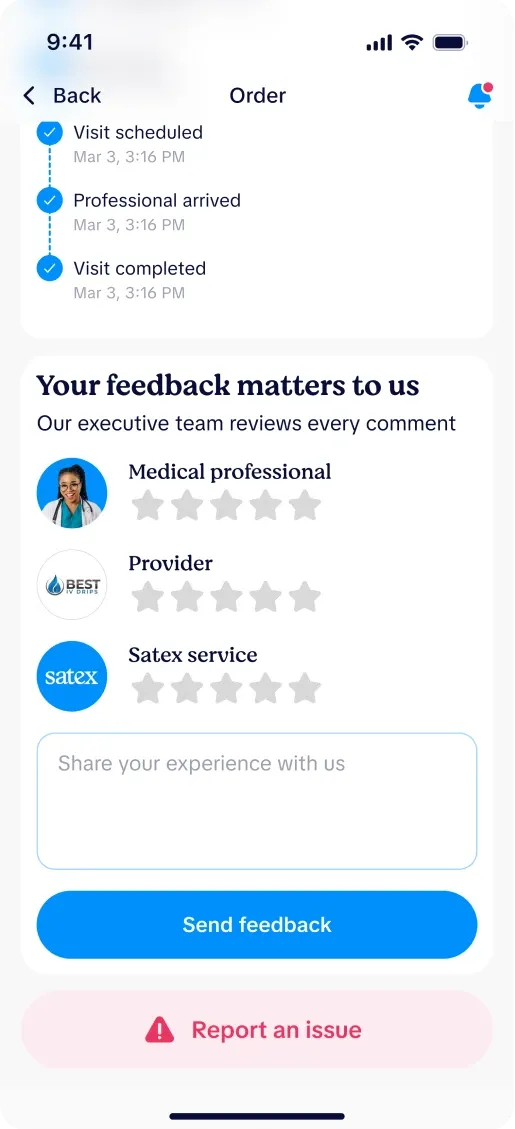
Open catalog access without forced upfront sign-in. Authentication and health intake trigger only at treatment selection to prevent drop-off.
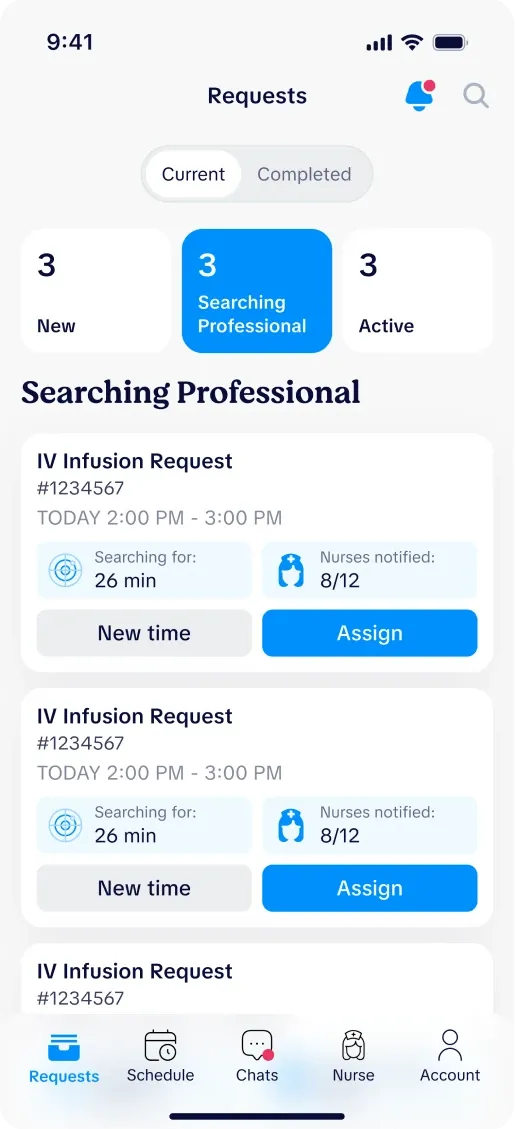
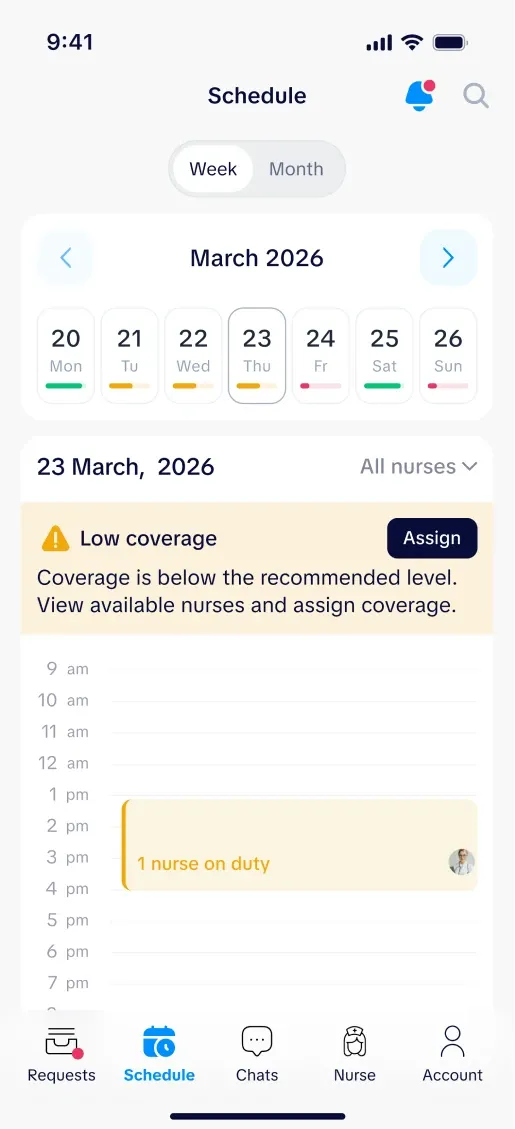
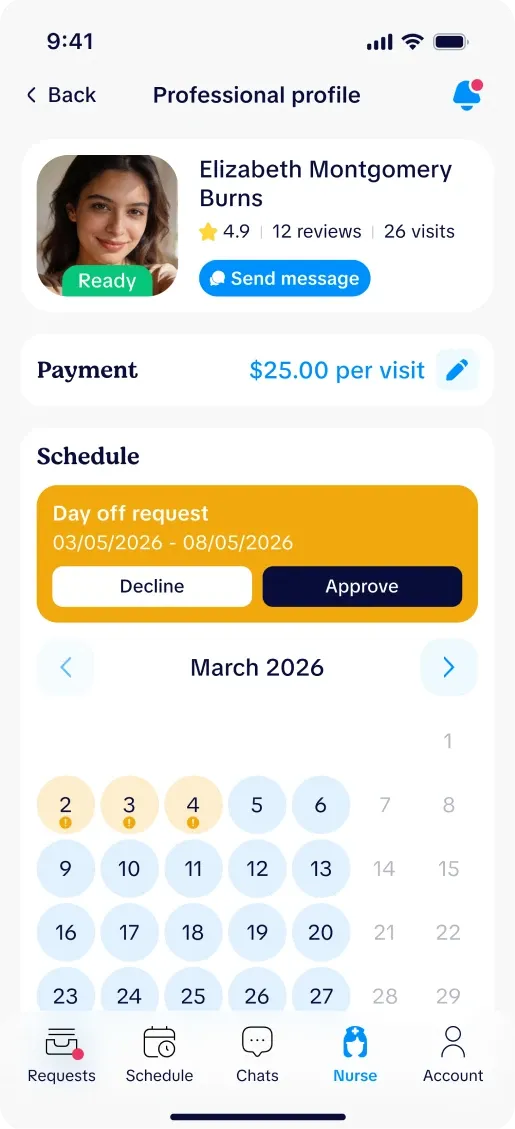
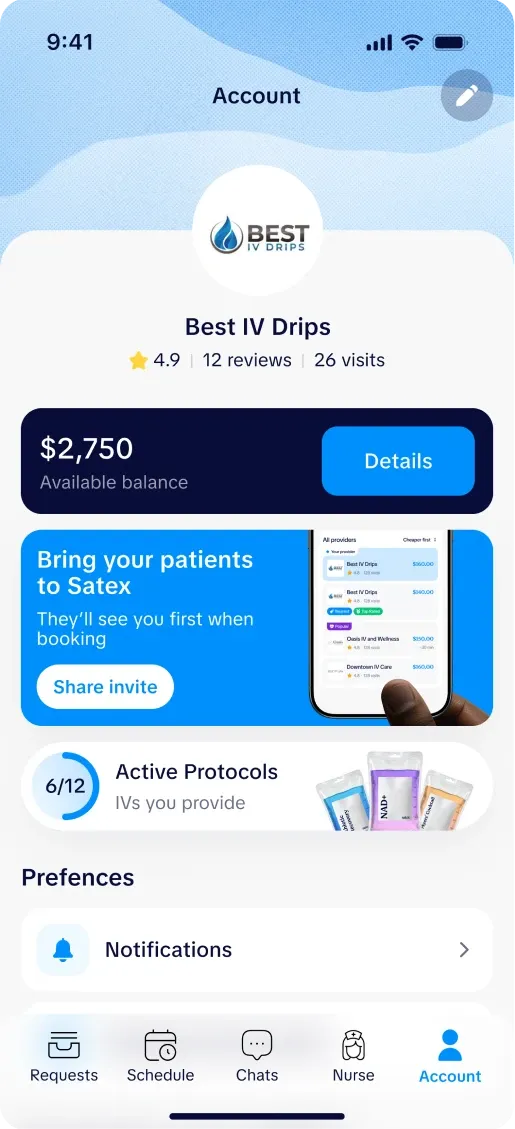
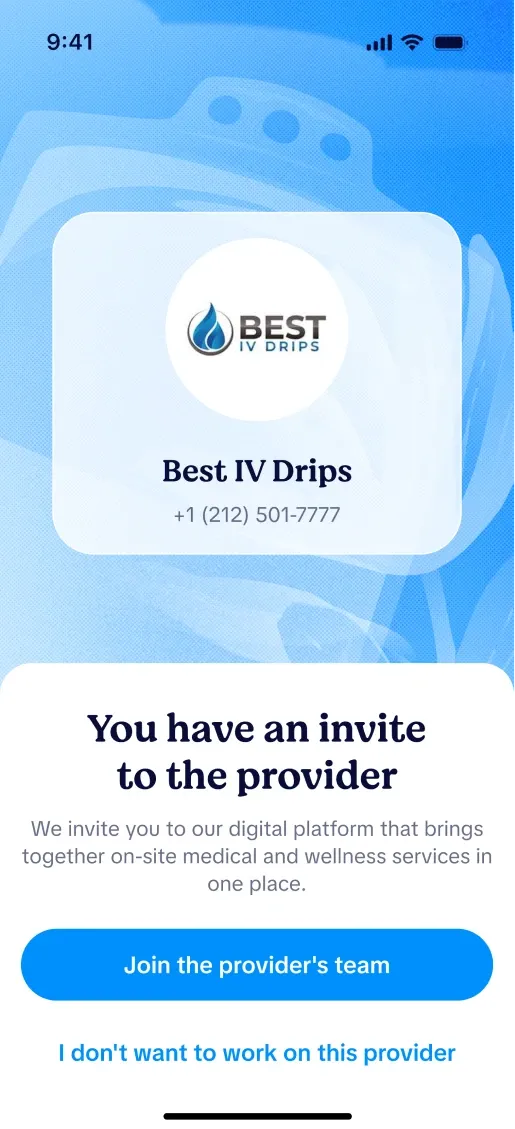
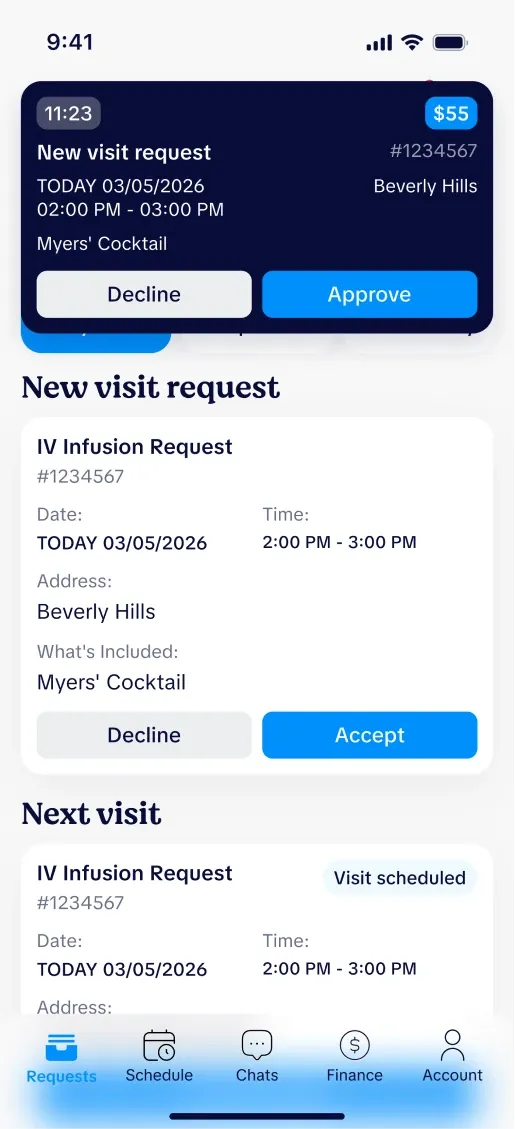
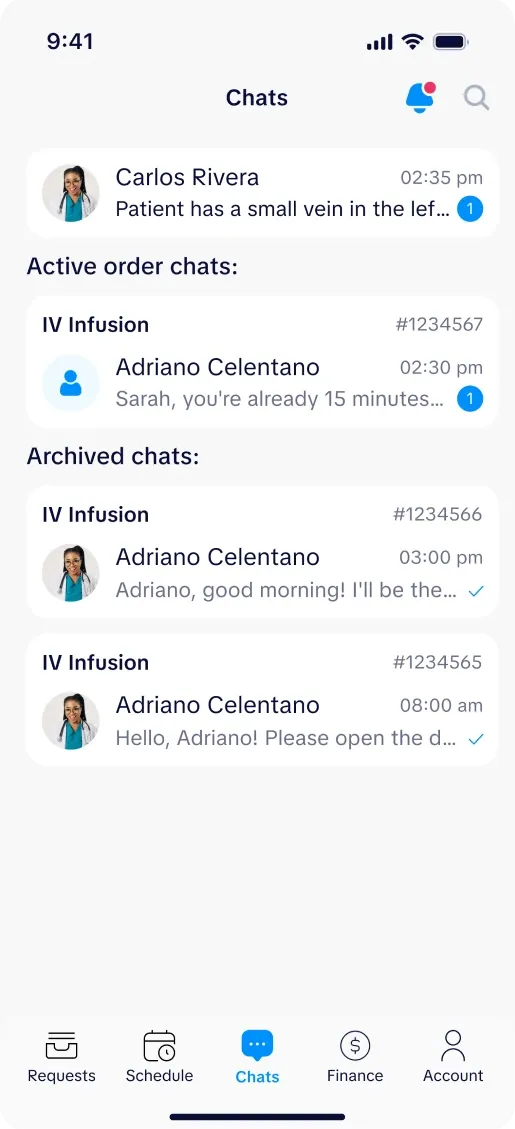
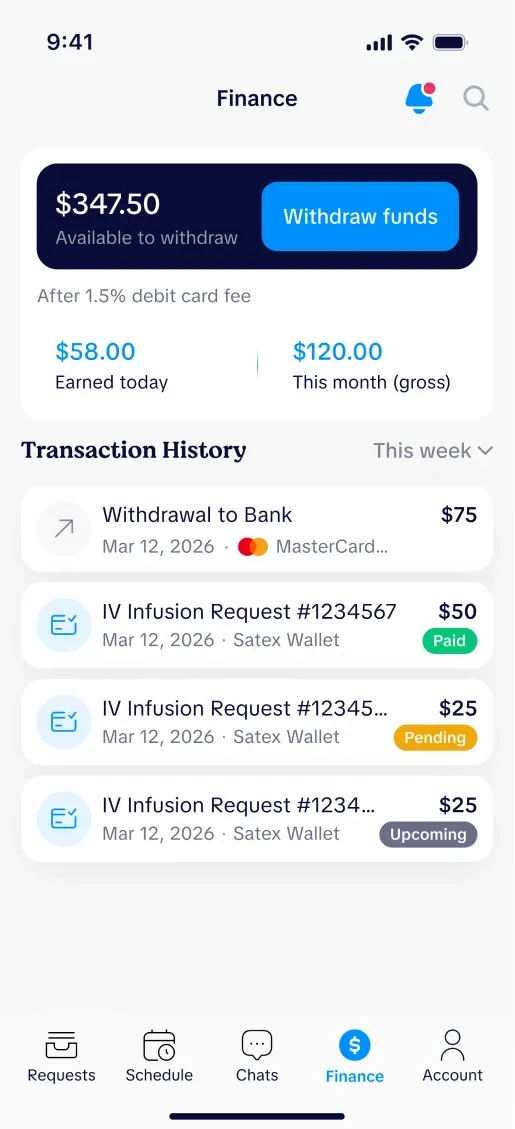
3.2. Provider App / Doctor & Nurse Interface
3.3. Design System
We built a componentized, Auto Layout-driven UI library that maintained visual consistency across 700+ screens and three products without visual drift.
Impact
Impact
Designed the MVP for a multi-role healthcare platform: — 700+ production-ready screens across 2 native apps and 1 web dashboard — 16 core operational flows mapped — 1 scalable design system supporting 3 user roles
Reflection
What I took away from this project is how much edge cases matter in healthcare — no nurse available, a cancellation mid-route, a request that just sits there. A missed step here isn't a bad experience, it's a missed treatment. That's pushed me to think through every scenario in detail, not just the main flow.